
MTG’s Spider-Man Survey: Wizards of the Coast Addresses Backlash with a Controversial Question










Popular Now
 Stumble Guys
 God of War Ragnarök
 Grand Theft Auto V
 Poppy Playtime
 Candy Crush Saga
 Free Fire
 Free Fire Max
 Genshin Impact
 Geometry Dash
 NBA 2K24
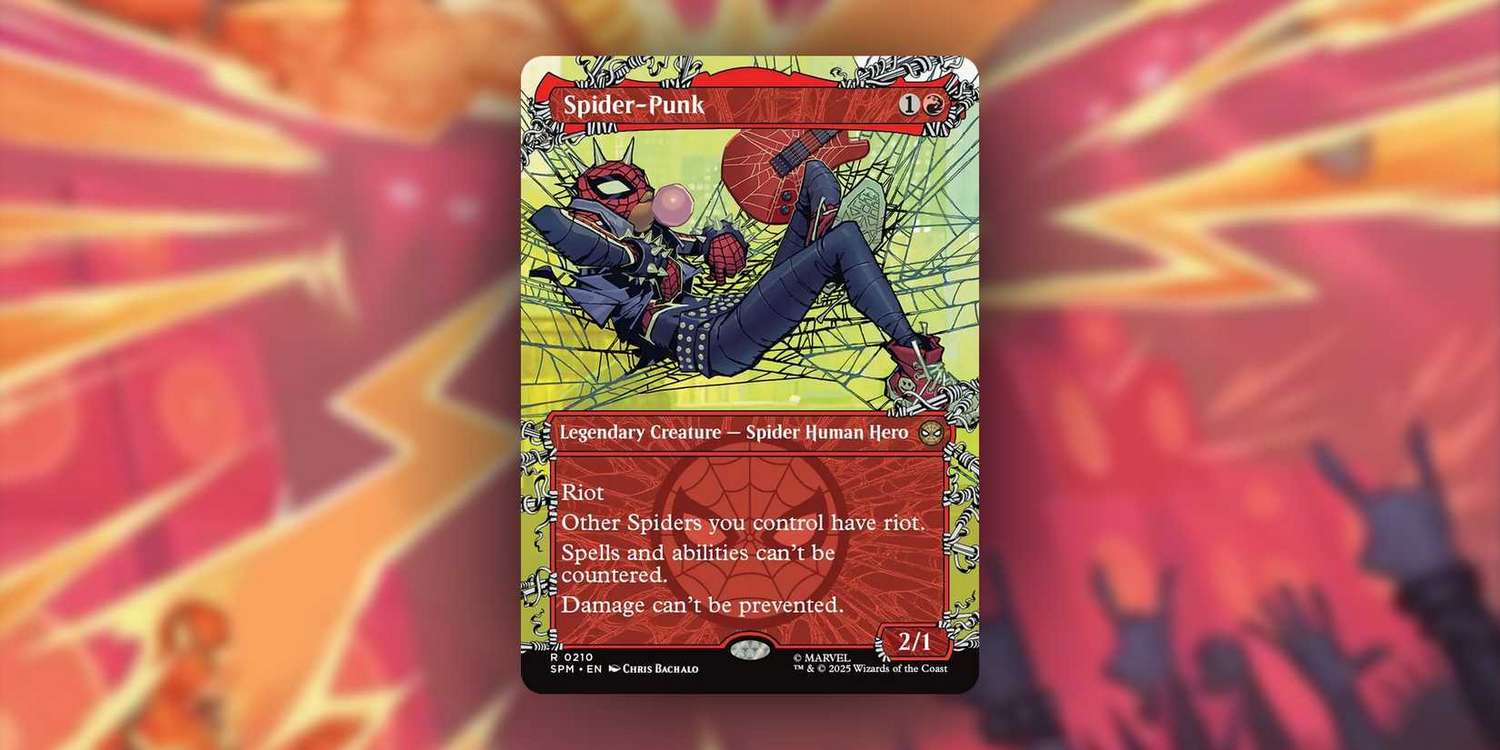 The reception to the Magic: The Gathering x Marvel’s Spider-Man set, part of the high-profile ‘Universes Beyond’ crossover line, has been one of the most divisive in recent memory. Following community complaints about the set’s limited environment, perceived low power level, and the overall feel of a street-level comic book character in a high-fantasy trading card game (TCG), Wizards of the Coast (WotC) released a player feedback survey. However, the survey itself has become a new source of controversy.
The Catch: A Question About Influencers
The element of the survey that drew immediate community and creator ire was a question that seemed to subtly point the finger at content creators for the set’s poor reception. Participants who listed streamers or content creators as their source of news for the Spider-Man set were presented with the follow-up query:
“To what degree did negative influencer commentary impact your perceptions of Magic: The Gathering | Marvel’s Spider-Man before the set released?”
The options ranged from “Greatly worsened my perception” to “Greatly improved my perception.”
 The Community Reaction: “A Witch Hunt”
The phrasing of this question was immediately interpreted by many players and professional MTG figures as an attempt by WotC to deflect blame from the set’s design and marketing onto the content creator community. Critics, including Hall of Fame player Luis ‘LSV’ Scott-Vargas, called the question “insane” and suggested it was an attempt to conduct a “witch hunt.”
The primary concern among influencers and the broader MTG community is that a negative result from this question could be used as justification to reduce engagement with, or even retaliate against, creators who publish honest, critical reviews of new MTG products. This comes at a time when the Trading Card Game market is rapidly expanding (projected to reach over $16 billion in 2026), making influencer marketing and community sentiment more valuable—and scrutinized—than ever.
Wizards’ Response: A “Mistake” in Semantics
Following the widespread backlash, WotC’s Head of Communications for Magic: The Gathering, Blake Rasmussen, responded to the controversy. Rasmussen acknowledged the question was poorly worded and “sucks,” assuring the community that the inclusion of the question was not malicious and the results would not be used to target content creators.
Rasmussen stated on social media that the intent was to gather “holistic” feedback on all factors that influence player perception, but admitted the negative focus of the question was a mistake in semantics that “doesn’t even make sense” with the given answers. He reiterated the company’s policy that they “don’t and won’t punish creators for having negative opinions of a set.”
 The Bigger Picture: Universes Beyond and Set Fatigue
The controversy surrounding the survey is a symptom of a larger, ongoing debate in the MTG community regarding the aggressive schedule of ‘Universes Beyond’ sets. While massive crossovers like The Lord of the Rings have been critically and financially successful, the Spider-Man set has reignited concerns about:
- Set Quality: Critics point to issues like a confusing ‘Pick Two’ Limited format and the set’s lackluster competitive impact.
- Brand Identity: The frequent infusion of external IP is seen by some traditionalists as diluting the core fantasy identity of Magic: The Gathering.
- Digital Disconnect: Licensing issues mean that the set’s art and names are different on the digital platform MTG Arena, adding confusion for players of the hybrid format.
Ultimately, while WotC has apologized for the misstep in the survey, the incident has highlighted the fragile relationship between publisher, creator, and community amidst a rapid-fire release schedule for the high-profit ‘Universes Beyond’ line.